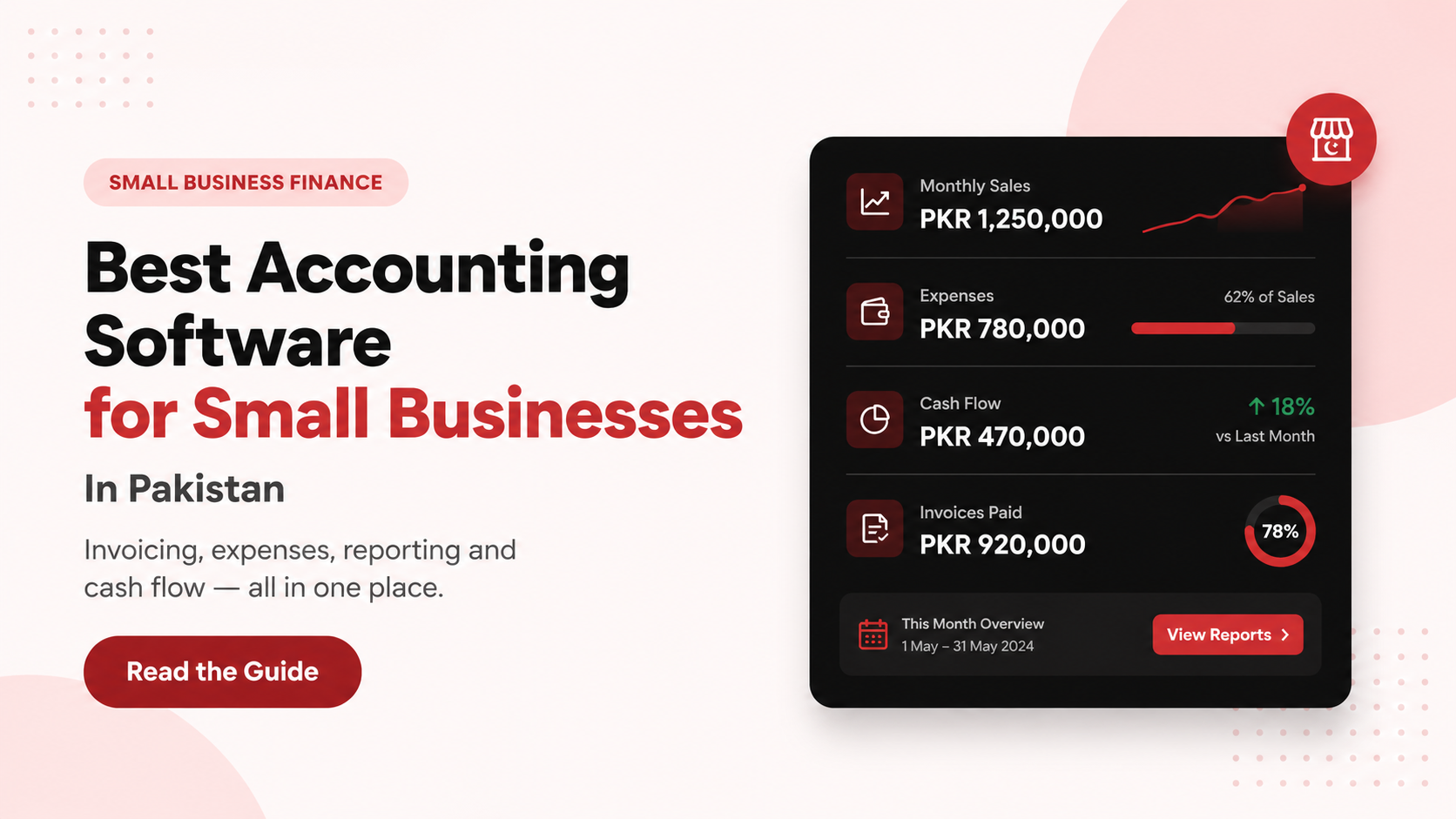
Running a small business in Pakistan involves much more than selling products or delivering services. Choosing the right accounting software for small businesses in Pakistan can help owners manage invoices, expenses, customer payments, supplier balances, taxes, cash flow and financial reports while still focusing on growth
When these activities are managed through spreadsheets, notebooks or disconnected applications, financial information can quickly become difficult to control. A missed payment, incorrect expense entry or outdated report can affect important business decisions.
This is where accounting software can make a significant difference.
Modern accounting software helps small businesses organize their financial information, automate routine processes and gain a clearer picture of their financial position. The right solution can reduce manual work while giving business owners better control over their day-to-day operations.
In this guide, we explain what small businesses in Pakistan should consider when choosing accounting software and which features are most important
Why Choose Accounting Software for Small Businesses in Pakistan?
Many small businesses initially manage their accounts using Microsoft Excel, paper records or simple invoicing tools. This may work while transaction volumes are low, but it becomes increasingly difficult as the business grows.
For example, a business may need to keep track of:
- Customer invoices
- Supplier bills
- Outstanding receivables
- Business expenses
- Bank transactions
- Cash payments
- Sales and purchases
- Taxes
- Inventory
- Profit and loss
- Customer and supplier balances
Managing all of this manually creates additional administrative work and increases the possibility of errors.
Accounting software provides a central place where financial transactions can be recorded and monitored.
Instead of maintaining multiple spreadsheets, a business can use one system to understand how much it has sold, how much customers owe, what suppliers need to be paid and whether the business is operating profitably.
This becomes particularly valuable as transaction volumes increase
Important Features to Look For
Not every accounting system is suitable for every business.
A freelancer, retail store, professional services company and growing trading business can all have different accounting requirements.
However, there are several core features that most small businesses should consider.
Invoicing
Invoicing is one of the most important functions for many small businesses.
Good accounting software should make it easy to create professional invoices, record payments and identify unpaid invoices.
Ideally, the system should allow businesses to:
- Create customer invoices
- Maintain customer information
- Track invoice status
- Record partial or full payments
- Monitor outstanding balances
- View previous transactions
- Generate customer statements
Having this information connected to the accounting system also means that businesses do not have to update their financial records manually every time an invoice is issued or paid.
This can significantly improve visibility over accounts receivable and cash flow.
Expense Management
Small expenses can become difficult to track when they are recorded across receipts, spreadsheets, WhatsApp messages and paper files.
Accounting software should provide a consistent process for recording business expenses.
Expenses may include:
- Office rent
- Utilities
- Fuel and transportation
- Salaries
- Marketing
- Internet and telephone
- Software subscriptions
- Professional services
- Equipment
- General operating costs
Categorizing expenses correctly allows management to understand where money is being spent.
It also makes financial reporting considerably easier at the end of the month or financial year
Financial Reporting
Accounting data becomes much more valuable when it can be converted into useful reports.
Small business owners should not have to wait until the end of the year to understand their financial position.
Useful accounting reports can include:
- Profit and Loss Statement
- Balance Sheet
- Trial Balance
- General Ledger
- Customer Ledger
- Supplier Ledger
- Accounts Receivable
- Accounts Payable
- Cash Flow reports
- Sales reports
- Expense reports
For example, a Profit and Loss Statement can help management understand whether revenue is increasing while also showing which expenses are affecting profitability.
These reports allow decisions to be based on actual financial information rather than assumptions.
Tax Management
Tax and financial record keeping are important considerations for businesses operating in Pakistan.
An accounting system should help businesses maintain organized records of sales, purchases, expenses and other financial transactions.
Having structured accounting records can make it significantly easier for accountants and financial teams to prepare information required for taxation and regulatory reporting.
Businesses should still work with qualified accounting or tax professionals to determine their specific obligations, but accounting software can provide the underlying financial records needed for that process
Cloud vs Desktop Accounting Software
Another important decision is whether to use desktop accounting software or a cloud-based accounting system.
Traditional desktop accounting software is normally installed on a particular computer or local network.
This approach can work for some businesses, but it can create limitations when employees need access from different locations.
Cloud accounting software is accessed through the internet and typically allows authorized users to work from different devices and locations.
For growing companies, cloud-based accounting software for small businesses in Pakistan can provide easier access to financial information from different locations
How Truefin Helps
Truefin is designed to help organizations manage financial information through a centralized accounting environment.
Rather than relying on disconnected spreadsheets and manual processes, businesses can maintain structured accounting records and use them to support everyday financial operations.
For a growing organization, the objective is not simply to replace Excel.
The greater value comes from creating a consistent financial process where transactions can flow into meaningful accounting records and management reports.
A business can then have better visibility into areas such as customer balances, supplier obligations, income, expenses and overall financial performance.
This is particularly useful for organizations that have moved beyond very basic bookkeeping and require greater control over their accounting operations.
Businesses evaluating Truefin should consider their specific requirements, transaction volumes, reporting needs and internal workflows to determine the most appropriate setup.
Conclusion
Choosing the best accounting software for a small business in Pakistan depends on the company’s size, industry, accounting requirements and plans for growth.
At a minimum, businesses should look for reliable invoicing, expense management, customer and supplier accounting, financial reporting and appropriate user controls.
The system should also make financial information easier to understand.
Accounting software should not simply record what happened in the business. It should help management understand the financial position of the organization and make better-informed decisions.
For businesses currently managing their finances through multiple spreadsheets or manual records, moving to a centralized accounting system can be an important step toward better financial control and sustainable growth.
Comments are closed.