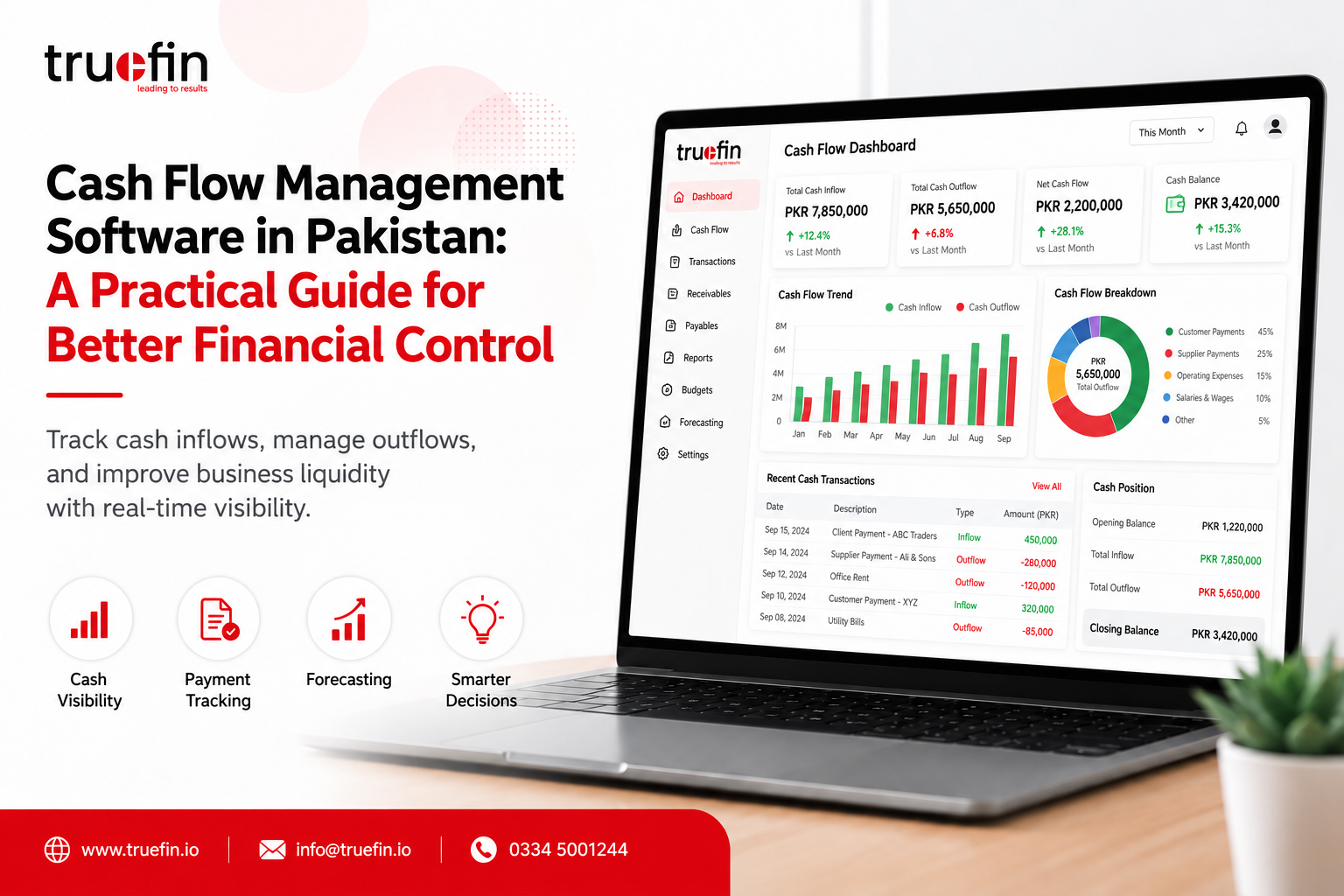
A business can be profitable on paper and still struggle to pay salaries, suppliers and operating expenses.
This happens when money is not entering the business at the same time that payments are due.
Why Cash Flow Management for Small Businesses in Pakistan Matters
Cash flow management for small businesses in Pakistan is therefore one of the most important parts of financial management.
Businesses need to know how much cash is available, how much money customers still owe, which supplier payments are approaching and whether upcoming expenses can be covered.
Good cash flow management can help businesses avoid financial pressure and make more informed decisions.
In this guide, we explain how cash flow works, why businesses experience cash shortages and what small businesses can do to improve financial control.
What Is Cash Flow?
Cash flow represents the movement of money into and out of a business.
Money coming into the organization is called a cash inflow.
Examples include:
- Customer payments
- Sales revenue
- Project receipts
- Owner investment
- Loans
- Other income
Money leaving the organization is called a cash outflow.
Examples include:
- Supplier payments
- Salaries
- Rent
- Utilities
- Taxes
- Equipment purchases
- Travel expenses
- Loan repayments
The objective of cash flow management is to ensure that sufficient cash is available when payments need to be made.
Profit Is Not the Same as Cash
One of the most common misunderstandings among small businesses is assuming that profit and cash are the same thing.
They are not.
For example, a business may issue invoices worth PKR 2 million during a month.
Those invoices may appear as revenue in the accounting records.
However, if customers have not yet paid those invoices, the business may not actually have PKR 2 million available in its bank account.
At the same time, salaries, rent and supplier payments may still need to be paid.
This is why businesses should monitor both profitability and cash flow.
Why Small Businesses Experience Cash Flow Problems
Customers Pay Late
Late customer payments are one of the most common causes of cash flow pressure.
A business may complete work and issue an invoice but wait several weeks or months before receiving payment.
During that period, the business may still need to pay employees and suppliers.
Too Much Money Is Tied Up in Inventory
Businesses that purchase inventory may invest significant amounts of cash in stock.
If products remain unsold for long periods, cash becomes tied up in inventory instead of remaining available for operating expenses.
Supplier Payments Are Due Before Customer Payments
A business may need to pay suppliers within 15 or 30 days while customers are allowed 30, 60 or even 90 days to pay.
This timing difference can create cash shortages.
Expenses Grow Faster Than Revenue
As businesses grow, they may hire employees, rent larger offices or purchase additional equipment.
If expenses increase faster than cash collections, financial pressure can develop quickly.
Poor Financial Visibility
Some businesses do not know their current cash position until a payment becomes due.
Without accurate accounting records and financial reports, management may not realize that a cash shortage is approaching.
How to Improve Cash Flow Management
Effective cash flow management for small businesses in Pakistan can help owners plan payments, monitor receivables and avoid unexpected shortages.
Track Accounts Receivable
Businesses should regularly monitor how much customers owe.
Useful information includes:
- Outstanding invoices
- Invoice due dates
- Overdue balances
- Customer payment history
- Aging of receivables
Businesses should follow up on overdue invoices promptly instead of waiting until cash becomes critically low.
Review Accounts Payable
Supplier obligations should also be monitored carefully.
Management should know:
- Which supplier invoices are outstanding
- When payments are due
- Which payments are overdue
- How much cash will be required during the coming weeks
This helps businesses plan payments more effectively.
Create a Cash Flow Forecast
A cash flow forecast estimates expected cash inflows and outflows over a future period.
For example:
| Item | Amount |
|---|---|
| Opening Cash | PKR 1,500,000 |
| Expected Customer Receipts | PKR 2,000,000 |
| Supplier Payments | PKR 1,200,000 |
| Salaries | PKR 900,000 |
| Rent and Utilities | PKR 200,000 |
| Expected Closing Cash | PKR 1,200,000 |
This forecast can help management identify future cash shortages before they occur.
Monitor Cash Flow Weekly
Small businesses should not wait until the end of the month to review cash.
A weekly cash review can help management identify problems earlier.
A simple review may include:
- Current bank balance
- Cash on hand
- Customer payments expected
- Supplier payments due
- Payroll requirements
- Tax obligations
- Other major expenses
This creates better visibility over short-term financial requirements.
Control Unnecessary Expenses
Cash flow problems are often made worse by uncontrolled spending.
Businesses should regularly review expenses and identify costs that are no longer providing sufficient value.
This does not mean eliminating every expense.
Instead, businesses should understand which costs are essential and which can be delayed or reduced.
Encourage Faster Customer Payments
Businesses may improve cash collections by:
- Sending invoices immediately
- Clearly showing payment terms
- Sending payment reminders
- Following up on overdue invoices
- Providing convenient payment methods
- Requesting advance payments where appropriate
For project-based businesses, milestone-based invoicing can also help improve cash flow.
Maintain a Cash Reserve
Where possible, businesses should maintain a cash reserve for unexpected expenses or temporary reductions in customer payments.
A reserve can help the business continue operating during short-term financial pressure.
Use Accounting Software for Better Cash Flow Visibility
Manual spreadsheets can make cash flow management difficult.
Information may be spread across multiple files, including customer invoices, supplier records and bank statements.
Using centralized accounting software can make it easier to monitor:
- Customer balances
- Supplier balances
- Bank accounts
- Expenses
- Revenue
- Outstanding invoices
- Financial reports
This provides management with a more complete view of the company’s financial position.
Cash Flow Management for Project-Based Businesses
Project-based businesses face additional challenges.
A project may require significant spending before the customer makes the final payment.
For example, a construction or software implementation project may involve:
- Employee costs
- Materials
- Supplier payments
- Travel
- Equipment
- Other operating expenses
Management should therefore monitor both the project budget and the timing of customer receipts.
Using project accounting alongside cash flow monitoring can help businesses identify projects that may create short-term cash pressure.
Cash Flow Management for NGOs
NGOs may receive funds in installments from donors while project expenses occur continuously.
This makes cash planning particularly important.
Organizations may need to monitor:
- Donor receipts
- Project budgets
- Project expenses
- Upcoming payments
- Available funds
Proper financial reporting can help management ensure that project activities remain financially sustainable.
How TrueFin Can Help
TrueFin can help businesses maintain centralized accounting records and improve visibility over financial activity.
Organizations can use accounting information to monitor areas such as:
- Customer balances
- Supplier balances
- Expenses
- Revenue
- Projects
- Budgets
- Financial reports
This can help reduce dependence on disconnected spreadsheets and provide management with more reliable financial information.
Businesses can also use financial reports to understand profitability while monitoring receivables, payables and available funds.
Cash Flow Management Best Practices
Businesses should follow a consistent financial process.
Useful practices include:
- Review bank balances regularly
- Record transactions promptly
- Monitor outstanding customer invoices
- Follow up on overdue receivables
- Review supplier payments
- Maintain realistic cash forecasts
- Control unnecessary expenses
- Compare actual cash flow with forecasts
- Maintain a reasonable cash reserve
- Review financial reports regularly
Small improvements in these areas can significantly improve financial stability.
Frequently Asked Questions
What is cash flow management?
Cash flow management is the process of monitoring money entering and leaving a business and ensuring sufficient cash is available for upcoming obligations.
Can a profitable business have cash flow problems?
Yes. A business may be profitable but still experience cash shortages if customers pay late or expenses must be paid before revenue is collected.
How often should small businesses review cash flow?
A weekly review is useful for many small businesses, although businesses with high transaction volumes may need to monitor cash more frequently.
What is a cash flow forecast?
A cash flow forecast estimates expected cash receipts and payments during a future period.
Can accounting software help manage cash flow?
Yes. Accounting software can provide visibility over customer balances, supplier balances, expenses, bank accounts and financial reports.
Why are receivables important for cash flow?
Unpaid customer invoices represent money the business has earned but has not yet collected.
Conclusion
Cash flow problems can affect even profitable businesses.
The key is not only understanding how much revenue the business generates, but also knowing when money will actually be received and when payments must be made.
Cash flow management for small businesses in Pakistan can help owners improve financial planning, reduce unexpected shortages and make better decisions.
Using accounting software can make cash flow management for small businesses in Pakistan easier by providing better visibility over income, expenses and outstanding balances.
By monitoring receivables, payables, expenses and future cash requirements, businesses can improve financial stability and reduce unnecessary financial pressure.
For growing businesses, using centralized accounting software such as TrueFin can make it easier to maintain accurate financial records and monitor important financial information.
For additional guidance on cash flow planning, businesses can review resources from the U.S. Small Business Administration.