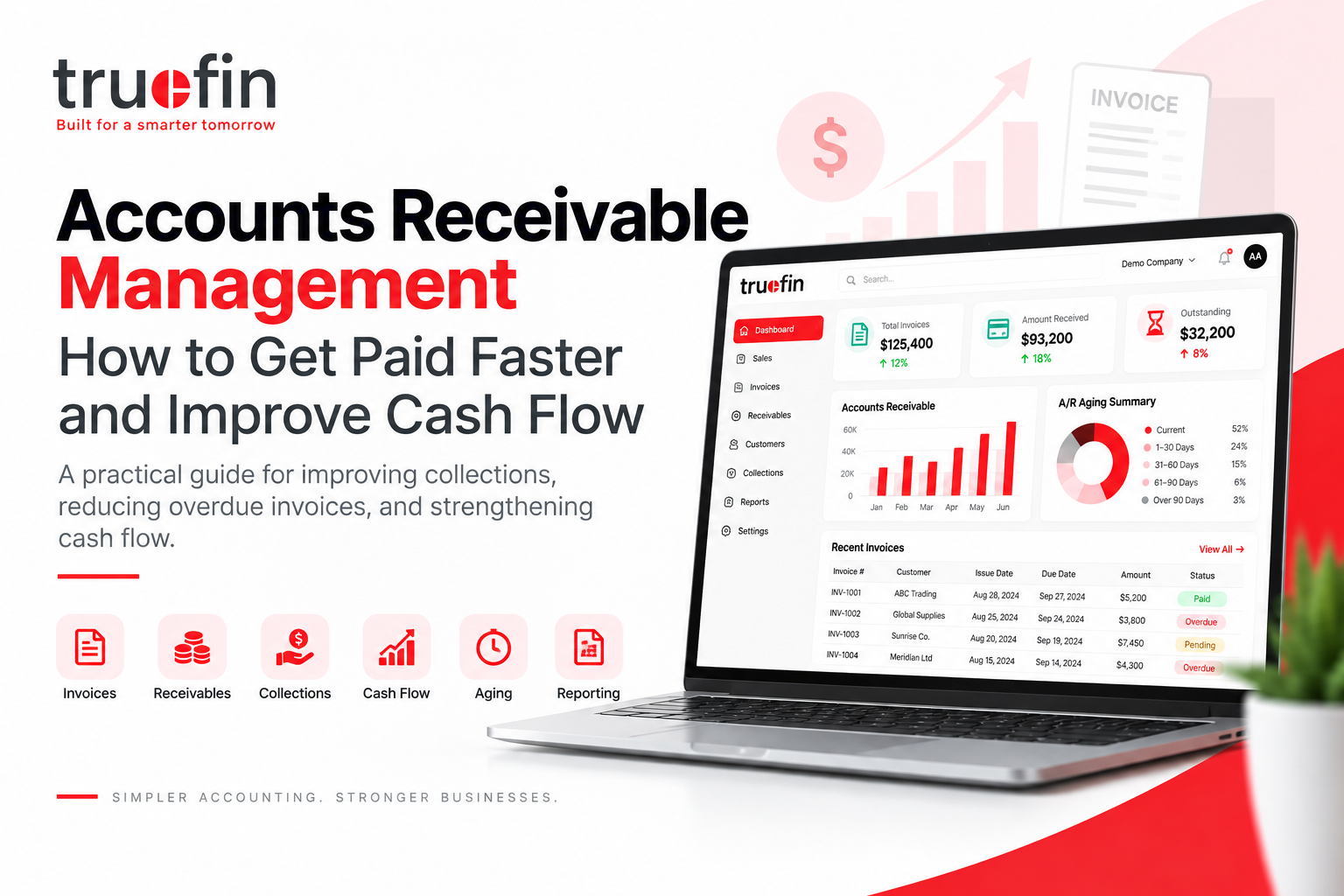
Getting paid on time is one of the biggest challenges for many businesses. A company may generate strong sales and still struggle with cash flow if customers delay payments.
That is why accounts receivable management is such an important part of financial management.
Accounts receivable refers to money customers owe a business for products or services already delivered. If these balances are not monitored properly, overdue invoices can increase, cash flow can weaken, and the business may struggle to pay salaries, suppliers, taxes, and operating expenses.
In this guide, we explain what accounts receivable management is, why it matters, common causes of delayed payments, and practical ways businesses can improve collections and maintain healthier cash flow.
What Is Accounts Receivable Management?
Accounts receivable management is the process of tracking customer invoices, monitoring outstanding balances, following up on overdue payments, and collecting money owed to the business.
It usually includes:
- Creating and issuing invoices
- Setting payment terms
- Recording customer balances
- Monitoring due dates
- Following up on unpaid invoices
- Sending payment reminders
- Reviewing aging reports
- Recording customer payments
- Reconciling receivables
- Managing overdue accounts
The goal is simple: collect customer payments as quickly and efficiently as possible without damaging business relationships.
Why Accounts Receivable Management Matters
Strong sales do not always mean strong cash flow.
A business can report revenue on paper, but if customers have not paid yet, that money is not available for daily operations.
Effective accounts receivable management helps businesses:
- Improve cash flow
- Reduce overdue invoices
- Identify late-paying customers
- Maintain accurate customer balances
- Plan expenses more effectively
- Reduce bad debts
- Improve financial forecasting
- Support better business decisions
The faster a business converts invoices into cash, the stronger its working capital position becomes.
Common Causes of Late Customer Payments
Late payments can happen for many reasons.
Understanding the cause is the first step toward improving collections.
Invoices Are Sent Too Late
If invoices are not issued promptly, the payment cycle starts late.
For example, if a project is completed on the 1st of the month but the invoice is sent on the 15th, the business has already lost two weeks before the payment term even begins.
Payment Terms Are Unclear
Customers may delay payment if invoices do not clearly show:
- Due date
- Payment terms
- Bank details
- Invoice number
- Amount due
- Contact information
Clear invoices reduce confusion and payment delays.
Customers Forget Due Dates
Some late payments are not intentional.
Customers may simply forget about invoices, especially if they manage many suppliers.
Regular reminders can help.
Invoice Disputes
Payments may be delayed if the customer disagrees with:
- Quantity
- Price
- Tax
- Scope of work
- Delivered service
- Supporting documents
Resolving invoice disputes quickly is essential.
Poor Internal Follow-Up
Businesses sometimes issue invoices but fail to follow up consistently.
Without a defined collection process, overdue invoices may remain unpaid for weeks or months.
How to Improve Accounts Receivable Management
A structured process can significantly improve payment collection.
1. Send Invoices Quickly
Invoices should be created and sent as soon as goods or services are delivered.
The sooner the customer receives the invoice, the sooner the payment process can begin.
Businesses should avoid waiting until the end of the month if billing can be completed earlier.
2. Use Clear Payment Terms
Every invoice should clearly mention payment expectations.
Examples:
- Due on receipt
- Net 7
- Net 15
- Net 30
- Net 60
The invoice should also clearly show:
- Invoice date
- Due date
- Total amount
- Tax amount
- Payment instructions
- Customer information
- Reference number
Clear terms reduce misunderstandings.
3. Track Outstanding Invoices
Businesses should maintain a clear list of unpaid invoices.
For each invoice, management should know:
- Customer name
- Invoice number
- Invoice date
- Due date
- Total amount
- Outstanding balance
- Days overdue
This makes it easier to prioritize collections.
4. Send Payment Reminders
Payment reminders should be sent before and after the due date.
A simple reminder schedule may look like this:
- 3 days before due date
- On the due date
- 7 days overdue
- 15 days overdue
- 30 days overdue
Reminders should remain professional and clear.
5. Prioritize Overdue Accounts
Not every overdue invoice has the same level of risk.
Businesses should focus first on:
- Large outstanding balances
- Long-overdue invoices
- Customers with repeated payment delays
- High-risk accounts
This helps the finance team use collection time more effectively.
6. Monitor Accounts Receivable Aging
An accounts receivable aging report groups unpaid invoices based on how long they have been outstanding.
A typical aging structure may look like this:
| Aging Period | Meaning |
|---|---|
| Current | Not yet due |
| 1–30 Days | Recently overdue |
| 31–60 Days | Requires follow-up |
| 61–90 Days | Higher collection risk |
| 90+ Days | Serious collection risk |
Aging reports help businesses identify which invoices need immediate attention.
7. Follow Up Consistently
Consistency is one of the most important parts of accounts receivable management.
Customers are more likely to pay when they know the business follows a structured process.
A collection workflow may include:
- Invoice issued
- Reminder sent
- Follow-up email
- Phone call
- Escalation
- Management review
A documented process helps ensure no overdue account is forgotten.
Use Customer Payment History
Customer payment history can provide useful insights.
For example, a business may identify customers who:
- Always pay on time
- Usually pay late
- Frequently dispute invoices
- Require repeated reminders
This information can help businesses make better credit decisions.
For high-risk customers, businesses may consider:
- Shorter payment terms
- Advance payments
- Deposits
- Partial payments
- Credit limits
Offer Multiple Payment Options
Customers may pay faster when payment is easy.
Depending on the business, payment options may include:
- Bank transfer
- Online payment
- Card payment
- Digital wallet
- Cheque
- Direct deposit
The easier the payment process, the fewer barriers there are to collection.
Reduce Invoice Errors
Invoice errors are a common reason for delayed payments.
Common mistakes include:
- Wrong customer name
- Incorrect amount
- Wrong tax calculation
- Missing purchase order number
- Missing project reference
- Incorrect bank details
- Duplicate invoice
A proper review process can reduce these problems.
Link Invoices to Projects and Customers
For project-based organizations, invoices should be linked to the relevant project and customer.
This helps management understand:
- Revenue by project
- Outstanding customer balances
- Project profitability
- Collection status
- Payment history
It also makes financial reporting more accurate.
How Accounting Software Helps Accounts Receivable Management
Accounting software can make receivable management easier and more reliable.
Instead of maintaining manual spreadsheets, businesses can use one system to manage invoices, customer balances, payments, and reports.
Accounting software can help with:
- Invoice creation
- Customer ledgers
- Outstanding balance tracking
- Due date monitoring
- Payment recording
- Aging reports
- Financial reporting
- Project-level receivables
- Customer account history
This gives management a clearer picture of how much money is still expected from customers.
Improve Cash Flow with Better Receivables Management
Accounts receivable is directly connected to cash flow.
When customers pay faster:
- Cash becomes available sooner
- Supplier payments become easier
- Payroll pressure is reduced
- Borrowing needs may decrease
- Business planning improves
Strong receivable management can therefore improve overall financial stability.
Accounts Receivable Management for SMEs
Small and medium-sized businesses are often more vulnerable to late payments because they usually operate with limited cash reserves.
A few large unpaid invoices can create serious cash flow problems.
For SMEs, effective accounts receivable management can help owners understand:
- Who owes money
- How much is outstanding
- Which invoices are overdue
- When cash is expected
- Which customers regularly pay late
This information can help owners make better financial decisions.
Accounts Receivable Management for Project-Based Businesses
Project-based businesses often have more complex billing arrangements.
Invoices may depend on:
- Project milestones
- Progress billing
- Retainers
- Deliverables
- Contract stages
- Time and materials
Tracking receivables by project helps businesses understand which projects have been billed and which payments are still outstanding.
Accounts Receivable Management for NGOs
NGOs may also need to track receivables in cases such as:
- Grant reimbursements
- Donor commitments
- Project reimbursements
- Partner settlements
- Service income
Accurate receivable records can improve transparency and financial reporting.
How TrueFin Can Help with Accounts Receivable Management
TrueFin is a cloud-based accounting and financial management platform that helps organizations manage invoices, customer balances, projects, budgets, vouchers, and financial reporting from one centralized system.
With TrueFin, businesses can improve receivable visibility by connecting customer transactions with accounting records and financial reports.
Organizations can use TrueFin to:
- Create and manage invoices
- Track customer balances
- Monitor outstanding receivables
- Record customer payments
- Link invoices to projects
- Review financial reports
- Monitor cash flow
- Maintain centralized customer accounting records
This helps finance teams reduce manual work and gives management better visibility into customer collections.
Best Practices for Accounts Receivable Management
Businesses can improve their collection process by following a few simple practices.
Send Invoices Immediately
Do not delay billing unnecessarily.
Use Standard Payment Terms
Apply consistent payment terms across customers where appropriate.
Review Aging Reports Regularly
Review overdue balances weekly or monthly.
Maintain Accurate Customer Records
Keep contact details and payment information updated.
Follow Up Professionally
Use a consistent collection process without damaging customer relationships.
Resolve Disputes Quickly
Invoice disputes should be addressed as soon as possible.
Monitor Customer Risk
Review payment history before extending additional credit.
Use Accounting Software
A centralized system can reduce manual errors and improve collection visibility.
Frequently Asked Questions
What is accounts receivable management?
Accounts receivable management is the process of tracking customer invoices, outstanding balances, due dates, payments, and overdue accounts.
Why is accounts receivable management important?
It helps businesses collect payments faster, improve cash flow, reduce overdue balances, and maintain accurate customer records.
What is an accounts receivable aging report?
An aging report groups unpaid invoices based on how long they have been outstanding, such as current, 30 days, 60 days, 90 days, and over 90 days.
How can businesses reduce late payments?
Businesses can reduce late payments by sending invoices quickly, using clear payment terms, sending reminders, tracking overdue balances, and following up consistently.
Can accounting software help with accounts receivable?
Yes. Accounting software can help businesses manage invoices, customer balances, payments, aging reports, and financial reporting in one centralized system.
How often should accounts receivable be reviewed?
Businesses should review receivables regularly, ideally weekly for active collections and at least monthly for financial reporting.
Conclusion
Effective accounts receivable management is essential for maintaining healthy cash flow.
Businesses should not wait until invoices become seriously overdue before taking action.
By sending invoices quickly, setting clear payment terms, monitoring outstanding balances, reviewing aging reports, and following up consistently, businesses can reduce payment delays and improve financial stability.
Accounting software can make this process easier by centralizing invoices, customer balances, payments, and financial reports.
TrueFin helps organizations manage receivables alongside accounting, projects, budgets, vouchers, and reporting, giving finance teams better visibility and control over customer collections.
Businesses can also review small business cash flow guidance from the U.S. Small Business Administration for general financial management practices.